

Request a Quote or Sample Now
Please leave your request for any product you wish. We will be happy to search it for you in our databases or offer its custom synthesis


Outdoor living spaces have become an essential extension of modern homes, commercial buildings, and public landscapes. As homeowners and designers seek materials that balance beauty, durability, and sustainability, Synthetic Decking has emerged as one of the most reliable and versatile choices available today. Unlike traditional wood decking, which often requires constant maintenance and is vulnerable to weather-related damage, synthetic alternatives are engineered to perform consistently in demanding outdoor environments.
This guide explores everything you need to know about Synthetic Decking—from materials and benefits to installation, maintenance, and long-term value. Whether you are planning a residential patio, a rooftop terrace, or a commercial boardwalk, understanding how synthetic decking boards work will help you make a confident and informed decision.
Synthetic Decking refers to outdoor decking materials manufactured from engineered components rather than natural timber. These products are designed to replicate the appearance of wood while offering improved resistance to moisture, insects, UV exposure, and daily wear.
Most synthetic decking boards are made from one of the following materials:
Wood Plastic Composite (WPC)
PVC (Polyvinyl Chloride) Decking
Capped Composite Decking
By combining advanced manufacturing techniques with durable raw materials, Synthetic Decking delivers consistent quality, uniform appearance, and predictable performance across a wide range of climates.
WPC decking blends wood fibers with recycled plastics, creating a balanced material that offers a natural texture with enhanced durability. It is widely used in residential decks, balconies, and garden walkways.
Key advantages include:
Natural wood-like appearance
Improved moisture resistance
Eco-friendly use of recycled materials
PVC decking contains no wood fibers, making it extremely resistant to water, mold, and insects. This type of Synthetic Decking is ideal for coastal areas, poolside decks, and high-humidity environments.
Main characteristics:
Lightweight yet strong
Excellent stain resistance
Minimal expansion and contraction
Capped composite boards feature a protective outer layer that shields the core from moisture, fading, and staining. This innovation significantly improves long-term color stability and surface durability.
This type of Synthetic Decking is increasingly popular for premium outdoor projects where appearance and longevity are equally important.

One of the strongest advantages of Synthetic Decking is its minimal maintenance. Unlike natural wood, it does not require regular sanding, sealing, or staining. Routine cleaning with water and mild detergent is usually sufficient to keep the surface looking clean and fresh.
Synthetic decking boards are engineered to withstand harsh weather conditions, including heavy rain, intense sunlight, and temperature fluctuations. They resist cracking, warping, and splintering, making them safer and more reliable over time.
Natural wood can vary in color and grain, while Synthetic Decking provides uniform appearance across all boards. This consistency is especially valuable for large decks and commercial installations.
Many manufacturers use recycled plastics and reclaimed wood fibers, reducing waste and reliance on virgin timber. Some brands, such as U-timber, focus on sustainable production processes to meet modern environmental standards.
When comparing decking materials, the differences between wood and synthetic options become clear.
| Feature | Traditional Wood | Synthetic Decking |
|---|---|---|
| Maintenance | High | Low |
| Moisture Resistance | Limited | Excellent |
| Lifespan | 10–15 years | 25+ years |
| Insect Resistance | Low | High |
| Color Stability | Poor | Strong |
While the initial cost of Synthetic Decking may be higher, the reduced maintenance expenses and longer lifespan often result in better long-term value.
Proper installation begins with a stable substructure. Synthetic decking boards are typically installed on aluminum or pressure-treated steel frames to ensure long-term structural integrity.
Although Synthetic Decking is more dimensionally stable than wood, it still expands and contracts slightly with temperature changes. Professional installation guidelines ensure correct spacing between boards.
Many modern decking systems use concealed fasteners, which improve appearance and prevent surface damage. This also contributes to a cleaner, more refined deck finish.
Maintaining Synthetic Decking is straightforward and cost-effective.
Recommended care practices include:
Regular sweeping to remove debris
Occasional washing with water
Prompt removal of spills to avoid surface staining
Unlike wood decks, synthetic surfaces do not require chemical treatments, making them safer for families and pets.
Homeowners commonly choose Synthetic Decking for patios, balconies, rooftop decks, and backyard entertainment areas due to its comfort and reliability.
Hotels, restaurants, shopping centers, and public walkways benefit from the durability and uniform appearance of synthetic decking boards.
Thanks to excellent water resistance, Synthetic Decking performs well in environments where moisture exposure is constant.
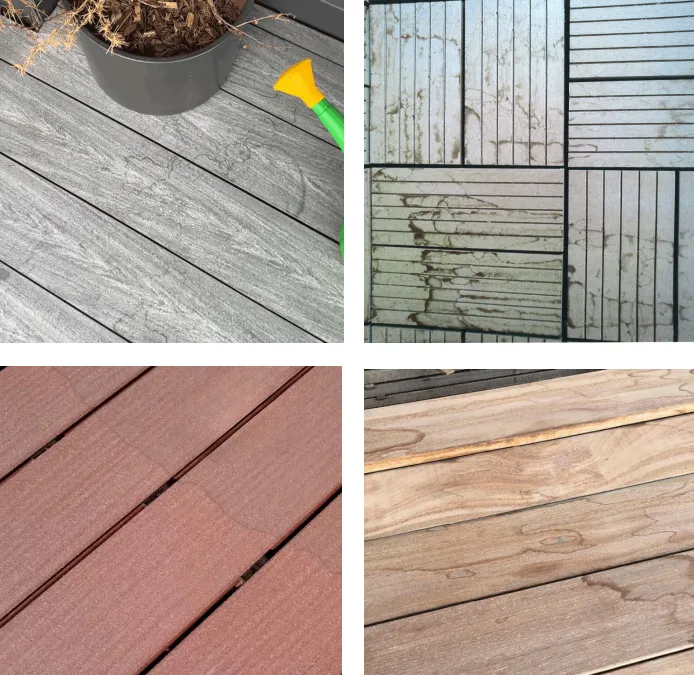
Modern Synthetic Decking is available in a wide range of colors, textures, and finishes. From classic wood tones to contemporary gray and charcoal shades, designers can match decking to architectural styles effortlessly.
Embossed grain patterns and matte finishes further enhance realism, making synthetic boards visually comparable to premium hardwood.
While the upfront investment for Synthetic Decking is higher than standard wood, long-term savings are significant.
Cost-saving factors include:
Reduced maintenance expenses
Longer replacement cycles
Fewer repairs due to damage
Over a 20–30 year lifespan, synthetic decking often proves more economical than traditional timber alternatives.

Selecting a reliable supplier ensures consistent product quality, technical support, and warranty coverage. Brands like U-timber focus on material performance, stable supply chains, and customer-focused service, making them suitable partners for both residential and commercial projects.
When choosing a supplier, consider:
Material certifications
Product warranties
Installation guidance
After-sales support
Yes. Synthetic decking boards are engineered to perform in hot, cold, humid, and coastal environments with minimal degradation.
High-quality boards with UV protection show very limited fading, especially capped composite products.
While DIY installation is possible, professional installation ensures proper spacing, alignment, and structural stability.
Most products feature textured surfaces designed to improve slip resistance, making them safe for poolside and outdoor use.
With proper installation and basic care, Synthetic Decking can last 25 years or more.
Synthetic Decking has redefined how outdoor spaces are built and enjoyed. By combining durability, aesthetic consistency, and low maintenance requirements, it offers a modern alternative to traditional wood decking. Whether used in residential gardens or large commercial projects, synthetic decking materials deliver long-term performance and reliable visual appeal.
As outdoor living continues to evolve, choosing the right decking solution is more important than ever. With thoughtful material selection, proper installation, and a trusted supplier, Synthetic Decking provides a future-ready foundation for beautiful, functional outdoor environments.

RECENT ARTICLES AND NEWS
Learn why water stains appear on composite decking, including tannin bleeding, hard water and pollution, plus simple cleaning and maintenance tips
Tired of that weird white substance popping up on your WPC deck after a few months outdoors?
Related Products
Request a Quote or Sample Now
Please leave your request for any product you wish. We will be happy to search it for you in our databases or offer its custom synthesis